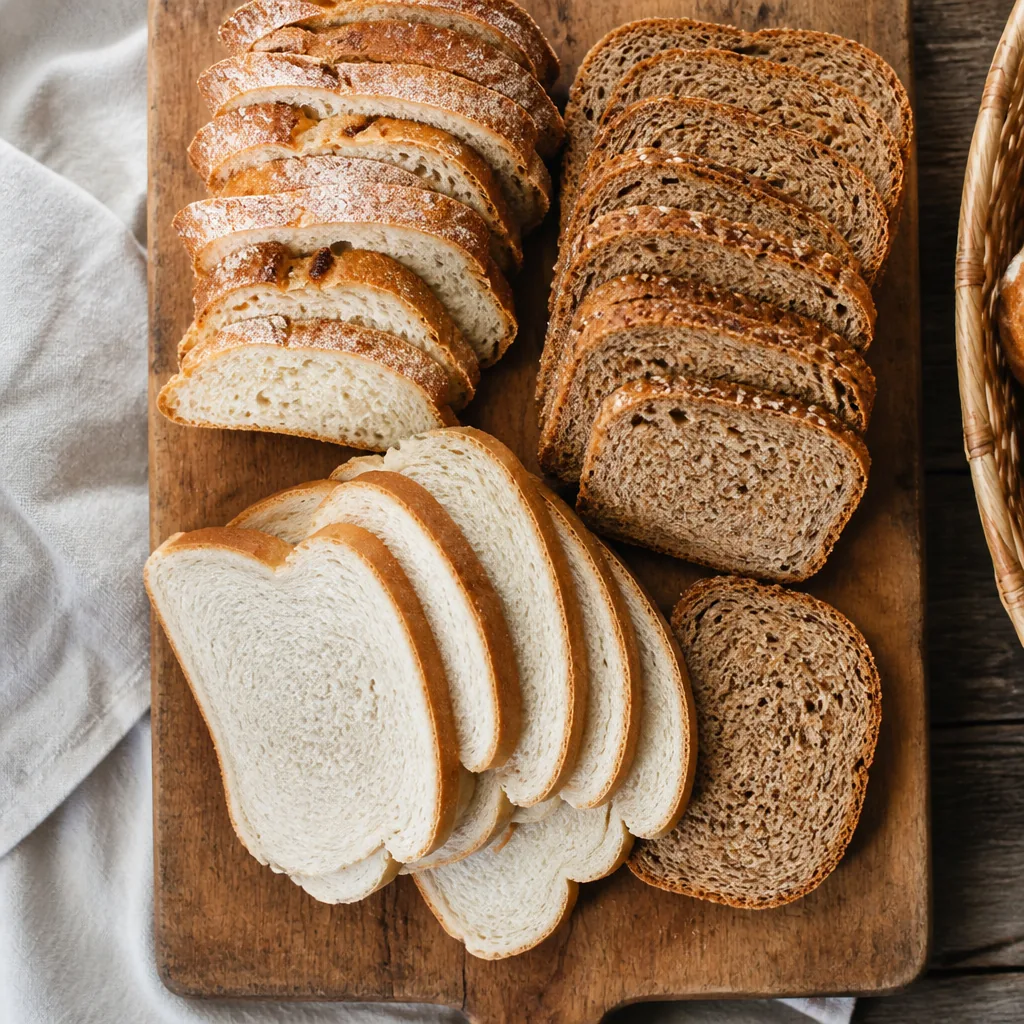
Most toast disappointments start at the shop, not the toaster. You can own the fanciest machine on the counter and still end up with a slice that is scorched at the edges and pale in the middle, or one that turns to dust the moment you spread anything on it. The bread you pick decides how heat travels through the slice, how much moisture it holds, and whether the surface crisps or simply dries out. Before you think about dials and settings, it pays to spend a moment reading the loaf: how tight its crumb is, how thick the crust runs, and how it has been cut. Get those three things right for the job in front of you and the toaster almost takes care of itself. This entry walks through what to look for, loaf by loaf, so the slice you pull out matches the meal you had in mind.
Crumb: the honeycomb decides the heat
The crumb is the soft, holey interior, and its structure is the single biggest clue to how a loaf will toast. A close, even crumb, the kind you see in a classic sandwich loaf or a fine wholemeal, browns steadily and predictably. Heat has fewer air pockets to jump across, so the whole face colours at a similar pace and the finished slice stays firm enough to butter without tearing.
An open crumb behaves differently. Think of a rustic sourdough shot through with large, irregular holes. Those gaps toast fast and can char at the thin walls while the denser patches are still catching up, which gives you a slice with dark lace and pale valleys. That is not a flaw; it is a texture, and it happens to be wonderful under a drizzle of oil or a scrape of garlic. Just know it is coming so you can pull the slice a shade early and let carry-over heat even things out.
A quick way to judge crumb by eye
Hold the cut face to the light. Small, tight holes mean a calm, even toast. Big, uneven holes mean a lively, patchy one. If you press a fingertip gently into the crumb and it springs back slowly and feels moist, the loaf has enough water to toast without drying to cardboard. If it feels dry and crumbly already, it will only get more brittle under heat.
Crust: the frame around every slice
Crust is the loaf's armour, and a thicker one changes the eating experience more than people expect. A hard, chewy crust, common on country loaves and baguettes, gives a slice with real bite at the edges and a soft interior, which is exactly what you want when the toast has to stand up to something heavy on top. A thin, soft crust, like the one on supermarket sandwich bread, toasts into a gentler, more uniform slice that suits delicate spreads and children who object to anything too rugged.
There is a practical catch. Very thick crusts can toast unevenly if the slice is wide, because the edge conducts heat differently from the middle. If you love a rustic loaf but hate burnt rims, cut slightly thinner slices and toast a notch lower, giving the interior time to catch up before the crust darkens.
Field note: the freshest loaf is not always the best toast. Bread a day past its peak has lost a little surface moisture, which means it browns faster and crisps more cleanly. This is why yesterday's loaf so often makes better toast than a warm one straight from the bakery.
Slice thickness: the number nobody sets on purpose
Thickness is the quiet variable that most people never adjust, yet it changes everything. A thin slice, around a centimetre, toasts quickly and crisps almost all the way through, which is ideal when you want a cracker-like base for something sharp or salty. It also dries out fast, so it is less forgiving if you get distracted.
A thick slice, closer to two centimetres, keeps a soft, almost custardy middle under a crisp face. That contrast is the whole appeal of a proper piece of thick toast with cold butter, or the reason a mashed-topping slice feels substantial rather than mean. The trade-off is time and heat: thick slices need a lower setting and a little patience, or the outside will race ahead of the inside.
- Thin (about 1 cm): crisp through, fast, great for sharp or crunchy toppings, dries out quickly.
- Medium (about 1.5 cm): the all-rounder, crisp face with a little give, forgiving on most settings.
- Thick (about 2 cm): soft middle, crisp shell, needs lower heat and works best for butter, jam and mashed builds.
Matching the loaf to the plan
Once you can read crumb, crust and thickness, choosing gets simple because you start from the topping and work back. Building an avocado slice or anything with a wet, mashed layer? Reach for a sturdy sourdough or a seeded loaf, cut medium, so the base holds without going limp. Making buttered toast for its own sake, or something with jam? A soft white or a gentle wholemeal cut thick gives that comforting crisp-outside, tender-inside bite. Planning a savory slice with egg or melted cheese? A dense wholegrain browns deeply and carries those richer flavours well.
Gluten-free and rye loaves are worth a separate word. Many gluten-free breads are drier and denser, so they toast beautifully but can turn brittle; a slightly lower setting and a quick spread of fat keeps them pleasant. Rye is moist and close-grained, browns slowly, and rewards a longer, gentler toast that lets its flavour open up.
Read the loaf before you cut it, and the toaster becomes the easy part.
None of this asks for special equipment or a trained palate. It is a habit: glance at the crumb, feel the crust, decide how thick to cut, and let the topping guide the rest. Do that and you stop fighting your toaster and start choosing your toast. The next entry picks up where this one leaves off, at the moment the bread meets the heat, and works through exactly how far to let the browning go.