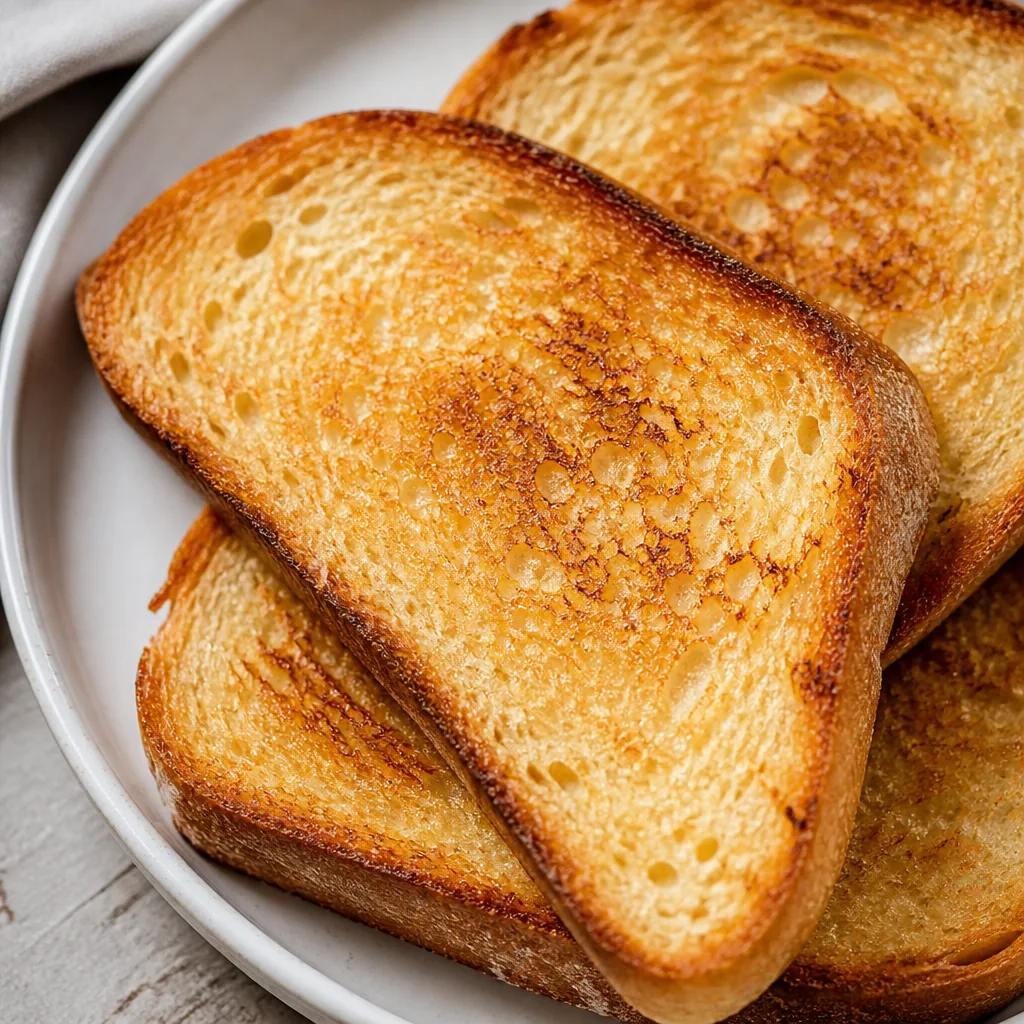
Char is the whole point of toast, and also the part most likely to go wrong. Push the browning too far and you get an acrid, ashy edge that no amount of butter can rescue; stop too soon and you have warm bread pretending to be toast, soft and flavourless. Somewhere between those two extremes sits a moving target where the surface has developed real depth, a nutty, faintly caramel note, without tipping into bitterness. The frustrating thing is that this sweet spot shifts with the loaf, the moisture in the slice, and even how many rounds your toaster has already done that morning. So rather than chase a single perfect setting, it helps to learn to read colour and smell directly, and to match the depth of browning to whatever you plan to put on top. This entry breaks the browning into stages you can actually see, and explains where each one earns its keep.
Why bread browns at all
When heat hits the surface of a slice, the sugars and proteins in the bread begin to react and rearrange into hundreds of new aromatic compounds. That is what turns pale dough into something that smells toasty and tastes far more complex than the raw loaf ever did. The colour you see is a rough gauge of how far that reaction has gone. Early on, it builds flavour. Past a certain point, the same heat starts to scorch and produce harsh, bitter notes instead. The art of toast is simply catching the slice while it is still on the good side of that line.
Moisture is the hidden lever. A drier slice browns faster because there is less water to drive off first, which is why day-old bread colours quicker than a fresh loaf and why a second batch in a warm toaster can leap ahead of the first. None of this needs measuring; it just means the dial is a starting suggestion, not a promise.
The four stages, and what each one is for
It helps to think of browning as four broad stages rather than a single ideal. Each has a job.
Pale gold
The surface has just tightened and taken on a faint straw colour. Flavour is gentle, the texture is barely crisp, and the middle stays soft. This is the stage for delicate things: good butter, a mild soft cheese, a slice you want to fold rather than snap. It is also the safest stage for a thick cut, where you are chasing a tender interior more than a shattering crust.
Golden brown
The classic. The face is an even, warm brown, the edges are crisp, and the toasty aroma is unmistakable. This is where most toppings feel at home, and where the balance between crunch and flavour is at its most generous. If you only ever aim for one stage, aim for this one.
Deep brown
A shade further, with the colour darkening toward mahogany and a stronger, almost roasted smell. The bite is firmer and the flavour has a nutty edge that stands up to bold company: melted cheese, a garlic rub, a fried egg with a runny yolk. Watch the rims here, because thin crusts can race past this stage while the centre is still catching up.
Dark and past it
Blackened spots, a sharp smell that tips from toasty to burnt. This is where bitterness sets in, and it is worth avoiding. If a slice reaches it, scraping the worst off with a knife can salvage a piece in a pinch, but the flavour never fully recovers. Better to pull the toast a moment before you think it is ready, since carry-over heat keeps working for a few seconds after it leaves the element.
Field note: trust your nose as much as your eyes. The smell shifts from sweet and toasty to sharp and acrid a beat before the colour looks alarming. When the aroma turns, the slice is done, whatever the timer says.
Toast to the topping, not the dial
The most useful habit is to choose your browning based on what is going on the slice. Pale gold flatters anything delicate or already rich. Golden brown is the reliable middle for jams, spreads and most savory builds. Deep brown gives structure and flavour to slices that have to carry strong toppings or a lot of moisture. Set the dial as a rough guess, then judge the finish by eye and smell, and adjust the next slice from there.
- Pale gold: butter, soft cheese, gentle spreads, thick cuts you want to keep tender.
- Golden brown: the default for jam, nut butters and everyday savory toppings.
- Deep brown: melted cheese, garlic, egg, anything bold or wet that needs a firm base.
Small fixes for common char problems
If your toast comes out dark at the edges and pale in the middle, the setting is too high for the slice; drop it a notch and give it longer. If it browns unevenly side to side, your toaster likely has a stronger element on one face, so turn the slice halfway or note which slot runs hot. If the whole thing is dry and cracker-like before it colours, the bread was too thin or too stale, and a thicker cut or a fresher loaf will help. And if a second batch keeps burning, let the toaster cool for a minute between rounds so it starts from the same place each time.
Colour is a signal, not a rule. Learn to read it, and every loaf tells you when to stop.
Browning is where toast stops being warm bread and becomes its own thing. Once you can see the stages and smell the turn, you can hit the depth you want on almost any loaf, and adjust on the fly when the bread surprises you. With the base sorted, the next question is what to put on it, and the following entry starts with the savory side.