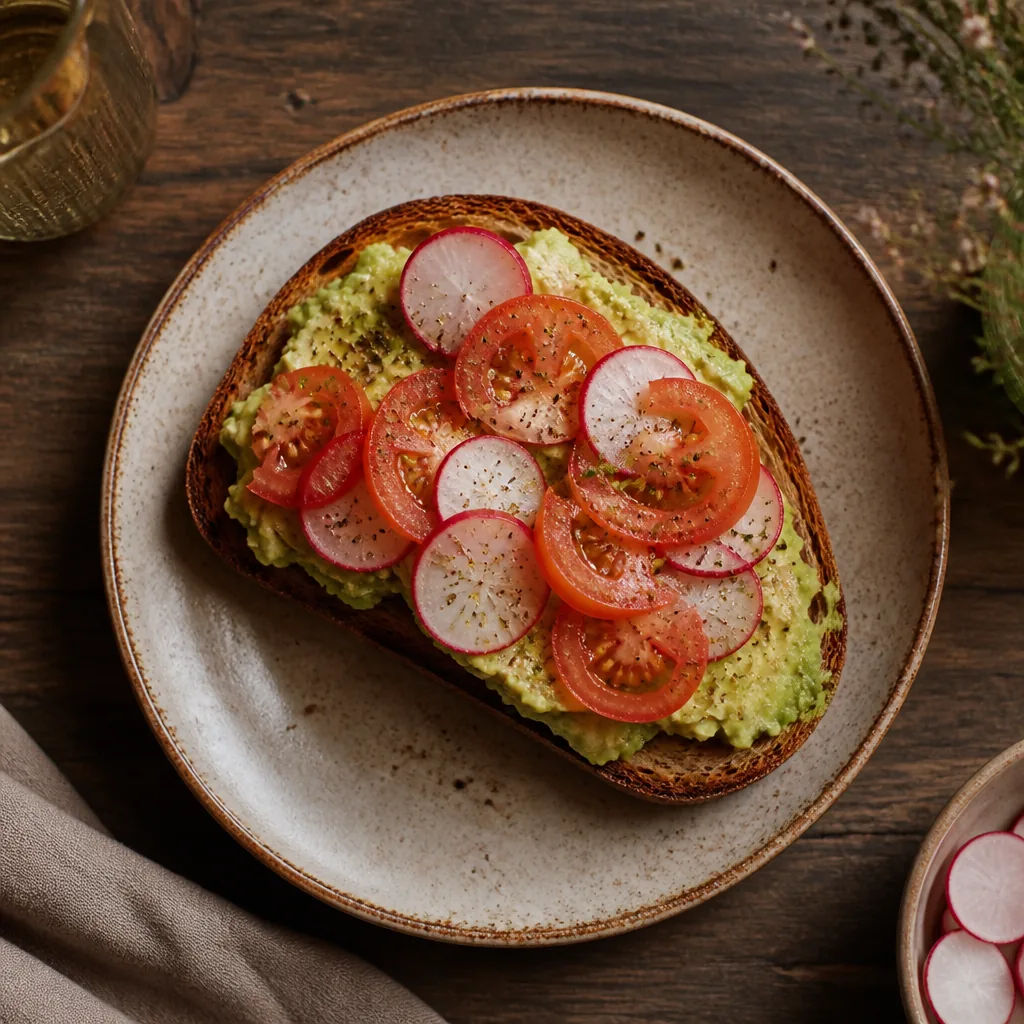
Mashed and layered toast is where a slice stops being a quick snack and turns into something you sit down for. Instead of a single topping, you build in stages: a soft, spreadable base pressed into the crumb, then layers stacked for contrast and texture, then a finish that ties it together. Done well, every bite carries a bit of each layer and nothing skids off onto the plate. Done carelessly, it becomes an unstable heap that falls apart the moment you pick it up, or a soggy mess where the base has soaked through the crust. The good news is that a few simple habits, spreading the base right to the edges, choosing layers that sit flat, keeping the wettest things off the bread until the end, make the difference between a slice that holds and one that collapses. The mashed avocado toast pictured here is a clear example: a soft green base anchoring crisp radish and juicy tomato, all of it built to stay in place. This entry sets out how to think about that structure and how to apply it to more than just avocado.
The base is glue, not garnish
The bottom layer on a built-up slice does two jobs at once. It seals the toast so juices from the upper layers do not soak straight into the crumb, and it acts as a mortar that everything above it can grip. That is why mashed and spreadable bases work so well here: mashed avocado, hummus, ricotta, cottage cheese, crushed beans or a thick nut butter all cling to the bread and hold the next layer in place.
Spread the base all the way to the edges and press it lightly into the surface of the toast. A base that stops short of the crust leaves bare corners where the top layers slide off, and one that just sits on top rather than settling in never grips properly. Think of it as buttering a wall before you tile it.
Mash for texture, not just smoothness
How finely you mash the base changes the whole slice. A rough mash, with some chunks left in, gives body and a rustic feel that suits avocado, beans or roasted squash. A smooth, whipped base, like well-beaten ricotta or blended hummus, reads as more delicate and lets the layers above take the spotlight. Season the base itself, with salt, lemon, oil or pepper, so the foundation tastes good before anything else goes on; a bland base drags the whole slice down.
Layer for contrast
The pleasure of a layered slice comes from contrast, so choose upper layers that differ from the base in texture, colour and taste. If the base is soft and rich, look for something crisp and fresh on top: thin radish, cucumber ribbons, sliced tomato, quick-pickled onion or a scatter of sprouts. If the base is tangy, a little sweetness or richness above it, roasted tomato, a soft egg, crumbled cheese, balances things out.
- Crunch — radish, cucumber, toasted seeds, crushed nuts or crisp shallots for bite against a soft base.
- Juice — tomato, roasted pepper or a soft-cooked egg for moisture, added late so the toast stays crisp.
- Sharpness — pickles, capers, lemon or a crumble of feta to keep a rich slice from feeling heavy.
- Finish — herbs, chilli flakes, flaky salt, a thread of oil or a dusting of spice to pull the layers together.
Field note: keep layers thin and flat rather than tall. A slice built low and wide is far easier to eat than a precarious tower, and each bite is more likely to pick up every layer at once.
Order matters
Build from sturdy to delicate. The base goes down first and gets pressed in. Next come the layers with a little structure, sliced vegetables or a firm protein, that can take the weight of what follows. Softer, juicier things go higher up, and the freshest, most fragile elements, herbs, sprouts, a squeeze of lemon, go on last so they stay vivid. Finishing salt and oil belong right at the end, applied just before the slice reaches the table so nothing has time to wilt or soak.
A worked example
Take the avocado slice in the photo. Start with a sturdy toasted sourdough so the base has something firm to sit on. Mash ripe avocado with salt, lemon and a little oil, then spread it thick and right to the edges. Lay thin rounds of radish and slices of tomato flat across the top so they overlap slightly and lock together. Finish with flaky salt, black pepper and, if you like, a pinch of chilli or a few herb leaves. Nothing here is complicated, but the order and the spread-to-the-edges base are what keep it from sliding apart.
Spread the base to the edges, stack from sturdy to delicate, and finish at the last moment. That is a slice that holds.
Once you treat the base as glue and think of the layers as a small piece of construction, mashed and layered toast becomes endlessly adaptable, a way to turn whatever is in the fridge into a proper plate of food. The final entry brings all of this back down to earth, with fast assemblies for the nights when even a built-up slice feels like too much effort.